Food
Pox and Comiteco: A Local Guide to the Spirits of Chiapas
Most travelers arrive in San Cristóbal de Las Casas knowing mezcal and tequila. Few arrive knowing pox (pronounced "posh") or comiteco. Both are older than mezcal as a commercial category, both are protected by denomination of origin, and both are worth understanding before you order one.
This guide covers what they are, how they are made, how to drink them, and where to try them in San Cristóbal de Las Casas.
What is pox?
Pox is a distilled spirit made from corn, sugar cane, and wheat, produced in the highlands of Chiapas since pre-Hispanic times. It was traditionally used in Maya ceremonies and is still produced by small family distilleries in the region.
Pox has a Denominación de Origen (protected designation of origin) granted by the Mexican government, which means it can only be produced in specific municipalities of Chiapas, following specific methods. If you see "pox" on a bottle produced outside Chiapas, it is not real pox.
How it is made
The process is similar to other agave and corn spirits: the ingredients are cooked, fermented, and distilled. What makes pox distinct is the corn base — most Mexican spirits are agave-based, but pox is corn-based, which gives it a rounder, slightly sweeter profile than mezcal or tequila.
How to drink it
Pox is traditionally drunk neat, at room temperature, in a small copita (like mezcal). It is also used in cocktails, especially in the bars of San Cristóbal de Las Casas. If you are trying it for the first time, ask for it neat first — that is how you taste what it actually is.
What is comiteco?
Comiteco is a distilled spirit made from agave, produced in the Comitán region of Chiapas. It is similar in spirit to mezcal, but with its own production tradition and its own denomination of origin.
The name comes from Comitán de Domínguez, the town where it has been produced for centuries. Comiteco is smoother than most mezcals, with a rounder, less smoky profile — partly because of the agave variety used, partly because of the production method.
How it is made
The agave is cooked, crushed, fermented, and distilled, similar to mezcal. The difference is in the agave variety (often Agave americana rather than the espadín used in Oaxaca) and in the production method, which varies by family.
How to drink it
Comiteco is drunk neat, like a fine mezcal or whisky. It is not usually served in cocktails, though some bars in San Cristóbal de Las Casas do use it as a base for signature drinks.
Pox vs. comiteco: what is the difference?
The short version:
- Pox is made from corn, sugar cane, and wheat. It is rounder and slightly sweeter.
- Comiteco is made from agave. It is smoother and less smoky than most mezcals.
- Both are protected by denomination of origin and produced only in specific regions of Chiapas.
- Both are traditionally drunk neat, in small copitas.
The best way to understand the difference is to taste them side by side. That is exactly what we do on the Spirits from Chiapas tour.
Where to try pox and comiteco in San Cristóbal de Las Casas
You have three options:
1. On your own, at a bar
Most bars in the center of San Cristóbal de Las Casas will have pox and comiteco on the menu. Ask the bartender which one they recommend and why. The answer will tell you a lot about the bar.
2. At a market or specialty shop
The Mercado José Castillo Tielemans and the shops around the Andador Turístico sell bottles of pox and comiteco. This is the best option if you want to take a bottle home. Look for the denomination of origin seal on the label.
3. On the Spirits from Chiapas tour
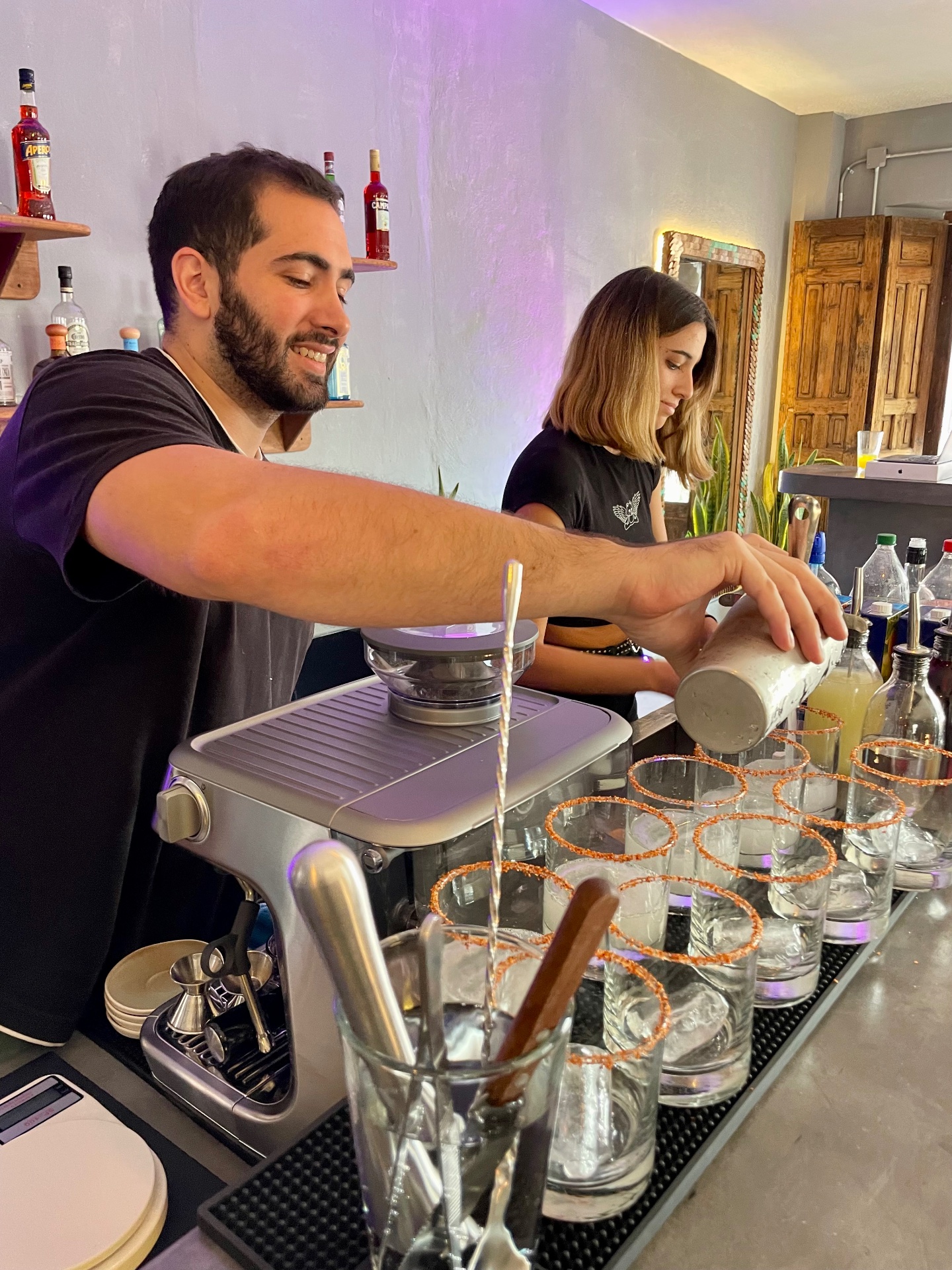
Our night tour is designed specifically for this. It is 3 hours, visits 3 bars, and includes tastings of pox, comiteco, and other local and Mexican distillates, plus signature cocktails by local bartenders and botana (snacks) at every stop. It is not a lecture — it is a night out with education built in. $880 MXN per person, runs at night, book on WhatsApp.
How to taste pox and comiteco like a local
A few things that will make the experience better:
- Do not shoot it. Pox and comiteco are sipping spirits. Drink them slowly, in small sips, like you would a good mezcal or whisky.
- Smell it first. Both have distinct aromas — pox is slightly sweet and grassy, comiteco is earthier. The smell is part of the experience.
- Try them side by side. The difference is clearest when you taste them back to back, not on separate nights.
- Ask where it is from. Every bottle has a story — the family, the town, the agave or corn. Ask, and the bartender will usually tell you.
Can you bring pox or comiteco home?
Yes, in checked luggage. Both are sold in bottles at markets and shops in San Cristóbal de Las Casas. Check your country's customs rules before you buy — most countries allow 1–2 liters of spirits per adult without duty.
Do not try to bring it in carry-on. It will be confiscated at security.
FAQ
Is pox the same as mezcal?
No. Pox is made from corn, sugar cane, and wheat. Mezcal is made from agave. They are different spirits with different production traditions and different denominations of origin.
Is comiteco the same as mezcal?
No, but they are closer. Both are made from agave, but comiteco uses a different agave variety and a different production method, and it has its own denomination of origin (Comitán region). It is smoother and less smoky than most mezcals.
Is pox strong?
Yes. Most pox is 40–50% alcohol by volume, similar to mezcal or whisky. Drink it slowly.
Can I try pox and comiteco without booking a tour?
Yes. Most bars in San Cristóbal de Las Casas serve both, and you can buy bottles at markets and shops. The tour is for people who want to understand the difference, not just taste it.
Want to taste pox and comiteco side by side, with someone explaining what you are drinking? Book the Spirits from Chiapas tour on WhatsApp or see the full tour here.